
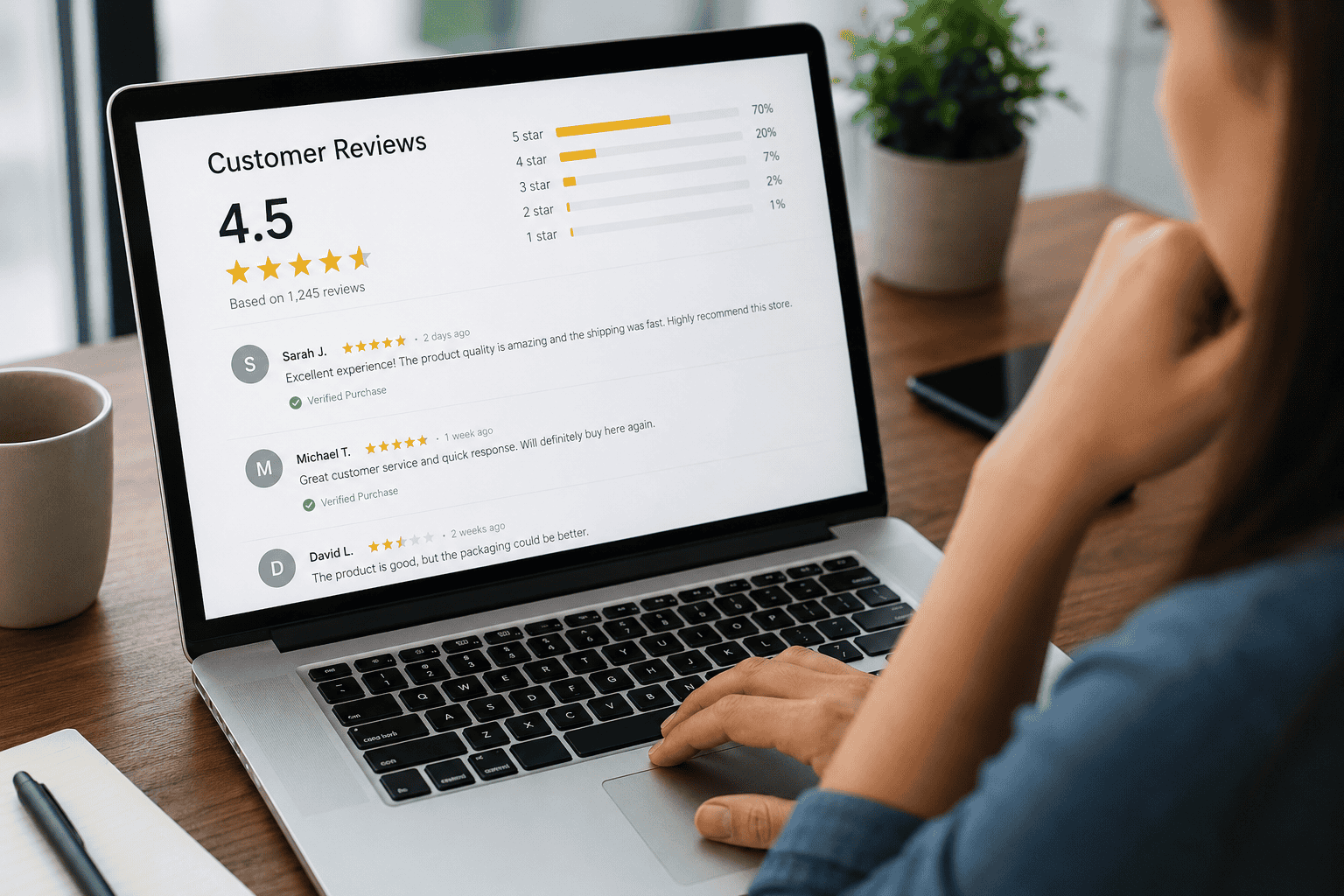
Online reviews have become one of the most important tools people use before choosing a company, booking a service, visiting a restaurant, hiring a professional, or buying a product. A few years ago, many decisions were based mainly on advertising, word of mouth, or the first result that appeared online. Today, customers want something more honest: real experiences from real people.
But reading reviews is not only about checking whether a business has five stars or one star. A smart buyer knows how to look deeper. Reviews can reveal patterns, strengths, weaknesses, customer service quality, delivery reliability, product consistency, and even how a company handles problems.
The key is knowing what to look for.
This guide will help you read online reviews more effectively, avoid misleading signals, and make better decisions before trusting a business.
Do Not Judge by the Star Rating Alone
A star rating is useful, but it should never be the only thing you consider. A business with 4.8 stars may look excellent at first glance, but the details behind that score matter.
How many people left reviews? Were the reviews recent? Do they describe real experiences, or are they extremely short and vague?
For example, a company with 4.6 stars from 2,000 reviews may be more reliable than a company with 5.0 stars from only 8 reviews. Review volume matters because it gives you a wider picture of customer experience.
Also, perfect ratings are not always more trustworthy. Every business can make mistakes. A company with mostly positive reviews and a few reasonable negative ones often looks more authentic than a profile where every review sounds unrealistically perfect.
A good approach is to treat the star rating as the starting point, not the final answer.
Look for Patterns, Not Isolated Opinions
One negative review does not necessarily mean a company is bad. One glowing review does not automatically mean it is excellent. What matters most is repetition.
If several customers mention the same issue, pay attention. Repeated complaints about late deliveries, poor communication, hidden fees, low-quality support, difficult refunds, or unclear policies may indicate a real problem.
On the other hand, if many customers praise fast service, helpful staff, fair pricing, product quality, or an easy buying experience, those strengths are probably meaningful.
Patterns are more valuable than emotional extremes. Some reviews are written when a customer is very angry or very impressed. That emotion is valid, but it may not represent the average experience. The smartest way to read reviews is to ask: what do most people seem to agree on?
Prioritize Recent Reviews
Businesses change over time. Management may improve, teams may grow, suppliers may change, and customer service policies may become better or worse. That is why recent reviews are often more useful than old ones.
A bad review from four years ago may not reflect how the company operates today. Likewise, a company that had great reviews in the past may have declined recently.
When evaluating a business, check what customers have said in the last few months. Are recent reviews positive? Are new complaints appearing? Has the company improved after previous criticism?
Fresh feedback gives you a better understanding of the current customer experience.
Read Both Positive and Negative Reviews
Many users only read the best reviews or only the worst reviews. Both approaches can create a distorted view.
Positive reviews show what a company does well. They can help you understand why customers choose that business, what they appreciate, and what type of experience you may expect.
Negative reviews, however, are equally important. They help you understand possible risks. The goal is not to avoid every company with a bad review. The goal is to decide whether the complaints are relevant to you.
For example, if someone complains that a restaurant was too busy on a Saturday night, that may not matter if you plan to go on a weekday. But if several people mention rude service, incorrect orders, poor hygiene, hidden charges, or ignored complaints, that is more serious.
Balanced reading leads to better decisions.
Pay Attention to Specific Details
The most useful reviews usually include specific details. A strong review explains what happened, when it happened, what product or service was used, how the company responded, and whether the customer would recommend it.
A vague review like “Amazing company!” is positive, but it does not tell you much. A review that says, “The support team answered my request within two hours, explained the process clearly, and solved the billing issue the same day” gives you real information.
The same applies to negative reviews. “Terrible service” is less useful than a review that explains the exact problem and how the business handled it.
When reading reviews, look for signs of real experience: dates, names of services, order details, communication examples, photos, or specific outcomes.
Notice How the Business Responds
One of the most underrated parts of a review profile is the company’s response.
Every business can receive criticism. What matters is how it reacts. A professional response can show responsibility, transparency, and a willingness to improve. A defensive or dismissive response can be a warning sign.
Look for businesses that respond calmly, respectfully, and constructively. Good companies usually thank customers for their feedback, apologize when appropriate, explain what happened, and offer a way to resolve the issue.
A business that handles negative feedback well may be more trustworthy than one that ignores customers completely.
Be Careful with Reviews That Sound Too Extreme
Reviews that are extremely positive or extremely negative can be useful, but they should be read carefully.
Overly positive reviews may sometimes sound unnatural if they use generic marketing language, repeat the same phrases, or lack personal details. On the other hand, extremely negative reviews may be written in the heat of the moment and may not always include the full context.
This does not mean you should ignore them. It means you should compare them with the rest of the feedback.
If an extreme opinion matches a common pattern, it may be important. If it stands alone, it may simply be one person’s unusual experience.
Smart buyers do not react to a single emotional review. They compare, filter, and evaluate.
Check Whether the Review Matches Your Needs
Not every review is relevant to your situation. A business can be excellent for one type of customer and unsuitable for another.
For example, a software company may be perfect for small businesses but too limited for large enterprises. A hotel may be great for families but not ideal for business travelers. A restaurant may be perfect for casual dining but not for a formal event.
When reading reviews, ask yourself: is this reviewer similar to me?
If the answer is yes, the review may be more valuable. Pay attention to customers who had the same needs, expectations, budget, or use case as you.
The best review is not always the most positive one. It is the one that helps you decide whether the business is right for you.
Use Reviews as a Decision Tool, Not a Guarantee
Reviews reduce uncertainty, but they cannot remove it completely. They help you make a more informed choice, but every customer experience can still be different.
A highly rated company can still make a mistake. A business with some negative reviews can still provide you with a great experience. Reviews should guide your decision, not replace your judgment.
Before making an important purchase or booking, combine reviews with other signals: the company’s website, policies, customer support, pricing transparency, guarantees, and communication quality.
The more information you gather, the better your decision will be.
Write Helpful Reviews Yourself
Reading reviews helps you choose better. Writing reviews helps others do the same.
A helpful review is honest, fair, and specific. It does not need to be long, but it should explain your experience clearly. Mention what went well, what could improve, and whether you would recommend the business.
Good reviews create a healthier marketplace. They reward companies that do things well and encourage others to improve. They also protect future customers from avoidable mistakes.
When you share your experience responsibly, you are not only giving feedback to a business. You are helping an entire community make better choices.
Final Thoughts
Online reviews are powerful because they bring real customer experiences into the decision-making process. But to use them properly, you need to look beyond the rating.
Read the details, compare patterns, check recent feedback, evaluate business responses, and focus on reviews that match your needs.
A smart buyer does not simply ask, “How many stars does this company have?” A smart buyer asks, “What are real customers consistently saying, and does this business look right for me?”
When used well, reviews can help you avoid bad experiences, discover reliable companies, and choose with greater confidence.
0 Comments
Login or create an account to leave comments